


Naderi Garden Museum, Mashhad

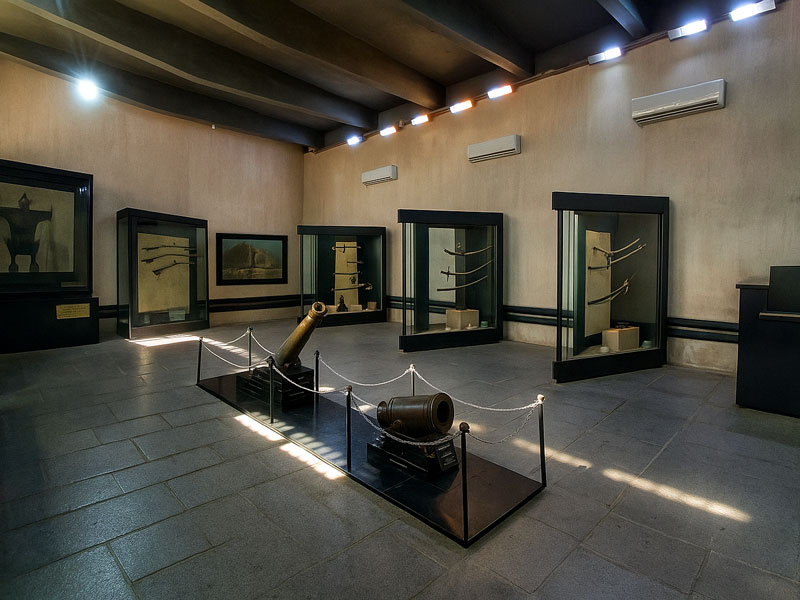
Naderi Museum Garden is located on a land area of 14,400 square meters on the northwest side of the Martyrs’ Crossroads of Mashhad. In the heart of the lush garden, a statue of Nader Shah Afshar can be seen on horseback next to a few of his soldiers. Seeing this statue reminds visitors of the power of Nader Shah and his soldiers against the invaders. Naderi Museum is located in the main part of Nader Shah’s tomb. It introduces historical monuments of his period in two halls, which the Easy Tour website will refer to in more detail later in the article.
Image of Naderi Museum Garden
History:
Nader Shah Afshar, one of the powerful kings of Iran, ordered the construction of a small tomb at the top of Mashhad Street during his lifetime.
This tomb was built in 1111 AH of brick and mud, adjacent to the Royal Gardens and opposite the holy shrine of Imam Reza (AS).
With the end of Nader Shah’s rule and the coming to power of his successors in Khorasan, the tomb began to deteriorate.
Until in 1294, Abdolhossein Teymurtash – a representative of Quchan – presented a plan to rebuild Nader Shah’s tomb to the parliament.
Finally, two years after the parliament voted in favor, in 1296, Qavam al-Saltaneh, the then governor of Khorasan, built a new tomb in the previous destroyed site.
He ordered that Nader Shah’s bones be transferred from Tehran to the new tomb.
In 1335, following a new decision to build a tomb in honor of Nader Shah, the design of engineer Houshang Seyhoun was approved after approval by the Fine Arts Council of Tehran University.
Finally, on 12th Farvardin 1342, the current building was reopened with the efforts of the Iranian National Monuments Association.
In 1386, the interior spaces of the Naderi Museum Garden were reviewed and renovated.
But after a 6-month closure, it resumed its activities.
Currently, this museum is under the management of the Khorasan Cultural Heritage, Handicrafts and Tourism Organization.
Architecture:
The design of the garden and tomb is based on two shapes: square and triangle.
The ponds, streams and cisterns are all based on the Persian garden.
The columns of the hall are modeled after the helmets of the Qizilbash soldiers of the Afsharid era.
His tombstone is based on the design of the Darya-e-Noor diamond, which is one of the most precious conquests of Nader Shah from India.
The stones used in the building are granite from the Koohsangi region of Mashhad.
Different sections of the museum:
The first hall is dedicated to various weapons of the Afsharid era, clothing and combat gear, riding equipment such as saddles and horse saddles from the Afsharid to Qajar eras.
There are several exquisite manuscripts including Naderi’s History of the World, paintings of Nader Shah and war scenes such as a painting of the Battle of Karnal and two swords belonging to Nader Shah.
The phrase “Al-Sultan Nader” is engraved on one of the swords.
On another, which was gifted to Nader Shah by the Iranian nation on the day of his coronation, this verse of poetry is gilded:
“The king of the world is the king of kings, Nader, the owner of the Quran.”
In the second museum hall, various types of dishes, coins, donated objects from the Safavid period to the present day, and some historical images and information are displayed.
In a corner of the garden, there are also subsidiary buildings such as community halls, a library, a greenhouse, and the tomb of Mohammad Taghi Khan Pesian, a military officer from the late Qajar period (the first Iranian to receive pilot training).
Specifications:
Address: Mashhad, Martyrs’ Crossroads, Nader Shah Afshar’s Tomb, Naderi Museum Garden
Contact number: 32224888-051
Visit hours: Every day from 8 am to 5 pm, except on official holidays