


What you need to know before traveling

Introduction:
Isfahan, with an area of 16,110 square kilometers and a population of over 2.2 million people, is the third most populous city in Iran.
In addition, it is the second most touristic city after Mashhad and the second most industrial city in Iran after Tehran.
The height of Isfahan is 1,575 meters above sea level.
This height plays a significant role in moderating the climate and turning it into a city with four seasons.
It also makes it possible for tourists to travel throughout the year.
Most people follow Islam and the Shiite religion.
However, Jews, Armenians, Christians, and other religious minorities also live in Isfahan.
In December 2015, Isfahan was registered by UNESCO, along with Rasht, as the first Iranian cities to be registered as Creative Cities of the World (a city that uses the innovation and capabilities of citizens in sustainable urban development).
This indicates the dynamic movement of this city in the process of keeping cultural heritage alive.
Isfahan also became the cultural capital of the Islamic world in 2006 and the cultural capital of ECO partner countries in 2010.
This city, with its rich historical background and numerous cultural and artistic attractions, has always attracted the attention of tourists.
History:
Now we will examine the history of this city in three different time periods:
Pre-Islam:
Isfahan is one of the ancient cities of Iran, whose natural and geographical location in the past encouraged Aryan tribes to settle there.
During the Parthian and Sasanian periods, it was the seat of government for princes and a gathering place for the Persian armies at that time.
The word Isfahan, which is derived from Espahan or Sepahan, itself expresses this statement.
At the time of the Arab invasion, there were two main neighborhoods: Jewish (Joybareh) and Zoroastrian (Gai).
After Islam:
The city of Isfahan began its expansion around these neighborhoods in the early Islamic centuries.
Until the time of the Buyids, this city became the center of government and important buildings were built around this city.
After that, the Seljuks increased its prosperity and development by choosing the city as their capital and built Seljuk Square, the government citadel and the Grand Mosque in this city.
As the city expanded, Isfahan gradually became the main center of Sunni Islam in central Iran.
Because the city of Isfahan did not have a uniform religious fabric, conflicts, killings and destruction occurred in the city from time to time.
In addition, the attacks of the Mongols and Timurids should be added, which caused great damage to this city.
Isfahan began a new stage of growth and prosperity with the rise of the Safavids.
The new Safavid city had a citadel, mosques, the large Naqsh-e Jahan Square, the royal bazaar, schools, caravanserais, baths, juice houses, palaces and buildings.
After that, the city fell into ruin once again with the invasion of the Afghans.
During the Qajar period, Dhal-e-Sultan, the son of Nasser al-Din Shah, became the ruler of Isfahan.
During his 30-year reign over Isfahan, he destroyed many Safavid palaces, mansions, and gardens, turning the city into a ruin, of which only a few buildings remain today.
Contemporary:
During the Pahlavi period, some industries, especially textile and spinning, entered the city.
In addition, the creation of communication networks that began in 1310 solar year brought new life to the city.
These events led to the booming of economic and commercial activities in the city.
The establishment of government organizations, banks, schools, universities, and recreational-cultural-educational centers during the second Pahlavi period all played an important role in the expansion of the city.
The process of economic prosperity, development, cultural brilliance, and the spread of the arts of Isfahan continued in the post-revolutionary era.
Finally, in 2006, Isfahan was chosen as the cultural capital of the Islamic world.
Tourist Attractions:
Isfahan, which is called half of the world due to its beautiful Islamic architecture and unique buildings in Iranian culture, has numerous attractions, which are mentioned below:
- Historical-Cultural Attractions
Due to the very long history of Isfahan, this city has important historical sites, historical houses, caravanserais, schools, markets, bridges, minarets, oil mills and museums. The most important of them are Naqsh-e-Jahan Square, Chehelsotun Palace, Hasht Behesht Palace, Ali Qapu Palace, Si-o-Se-Poll, Khaju Bridge, Chaharbagh School, Shahi Caravanserai, Shahi Oil Mill, Sarban and Chehel Dukhtar Minaret, Sheikh-ul-Islam Historical House (place of weaving Zari cloth), Molabashi House (boutique hotel), Javaheri Historical House (Handicrafts Museum), Decorative Arts Museum, Contemporary Arts Museum, Music Museum and many others. - Historical-religious attractions
Due to its geographical location and being located in the center of the Iranian plateau, Isfahan has been a place for the encounter of religions and the settlement of different religious sects throughout history. Therefore, it has many mosques, tombs, shrines, synagogues and churches. The most important of these buildings include: Abbasi Grand Mosque, Atiq Grand Mosque, Sheikh Lotfollah Mosque, Hakim Mosque, Takht Polad Mausoleum (the third largest mausoleum in the Islamic world), Armenian Mausoleum, Allameh Majlesi Mausoleum, Sayeb Tabrizi and Kamal Isfahani Mausoleum, Darb Imam Mausoleum, Harun Velayat Mausoleum, Vank Church, Bethlehem Church, Mulla Yaqub Synagogue and Isfahan Zoroastrian Fire Temple. - Natural attractions
With its many parks and gardens, Isfahan has one of the highest per capita green space rankings in Iran. The coastal parks on the banks of the Zayandeh River, the Flower Garden, the Bird Garden, Nazhvan Park, the Soffe Recreation Complex, and the Aquarium are considered natural attractions of the city. - Shopping and Food Centers
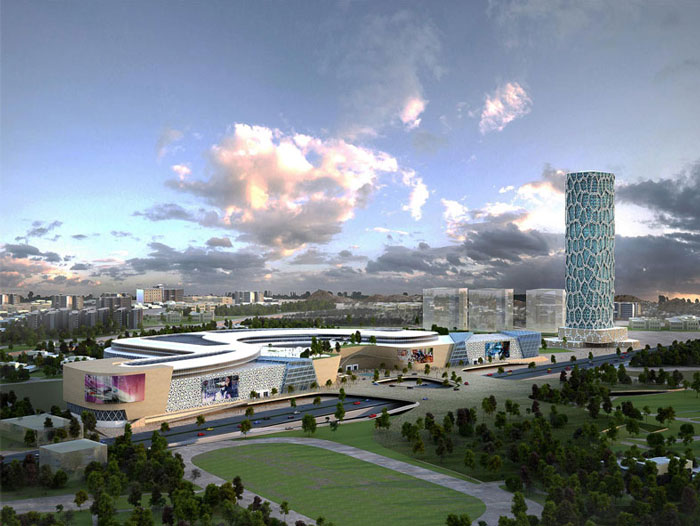
In addition to the scenic spots and historical monuments, Isfahan has traditional bazaars and modern shopping centers. Isfahan City Center (the heart of the city), Enghelab Shopping Center, Sepahan Shopping Center, Kowsar Complex, Park Complex, Nazar Shopping Center, among other modern shopping centers and the old bazaar