


Tomb of the Shahshahan of Isfahan

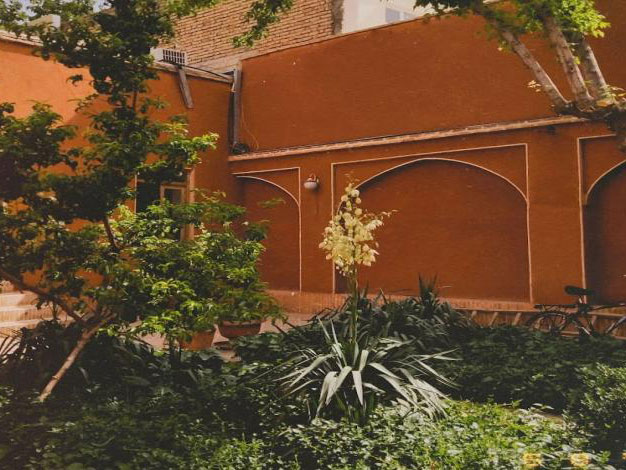
One of the old and valuable monuments of Isfahan, which has unfortunately been forgotten for several years, is the Shahshahan Tomb.
Introduction:
The Shahshahan Tomb of Isfahan is the tomb of Shah Alaeddin Muhammad, a mystic from the 9th century AH.
This tomb is located in the north of Isfahan, next to the Jame Mosque.
The historical Shahshahan Tomb was registered in the list of national monuments of Iran in 1327.
Shahshahan Tomb of Isfahan
History:
The background of the Alaeddin Shahshahan Tomb dates back to the Timurid era.
Shah Alaeddin was very much respected and honored during the reign of Shahrukh Timurid.
When Shahrukh Mirza was in Herat, Sultan Muhammad (a descendant of Shahrukh) was the ruler of Isfahan at the time.
After a while, Sultan Muhammad became greedy for power and refused to obey Shahrukh, incurring the wrath of the Shah.
After being informed, Shahrukh marched from Herat to Isfahan with the intention of suppressing Sultan Muhammad.
But Sultan Mohammad fled to Shiraz and from there to Lorestan.
In Isfahan, Shahrukh arrested and exiled Shah Alaeddin Mohammad and some of the nobles on charges of collaborating with Sultan Mohammad.
Then, at the instigation of Goharshad Begum, Shahrukh’s wife, he hanged them in Saveh.
Shahrukh died about 80 days after this incident.
After Shahrukh, Sultan Mohammad became the ruler of Isfahan and ordered that Shah Alaeddin be brought from Saveh to Isfahan and buried in the current tomb.
Shah Alaeddin had the title of Naqeeb al-Naqba, which was the highest position after the throne.
For this reason, he was known as Shahshahan or Shah of Shahs.
Architecture:
This building has a beautiful historical dome that was restored and rebuilt in the early Pahlavi era.
Between 1325 and 1330, a pair of carved wooden doors were installed at the entrance to the tomb.
The inside and outside of the tomb are covered with inscriptions, stucco, and tiles. The tomb’s entrance also has tile decorations.
One of the inscriptions in the Thull script describes the family tree of Shah Alaeddin and the story of his hanging.
Another inscription is located on the northern wall of the tomb, which describes how the tomb was repaired during the reign of Shah Abbas I.
Poems are also written in white Nastaliq script on the eastern wall inside the tomb.
A vase is painted on the wall of the eastern side of the building, on the body of which poems by Saadi Shirazi are written from top to bottom in white Nastaliq script on a light green background.
Address: Isfahan, Ibn Sina Street, Safa Mosque Alley, Shahshahan Square
If you want to get complete information about Isfahan’s tourist attractions, follow Asan Tour.