


Tehran Glass and Pottery Museum

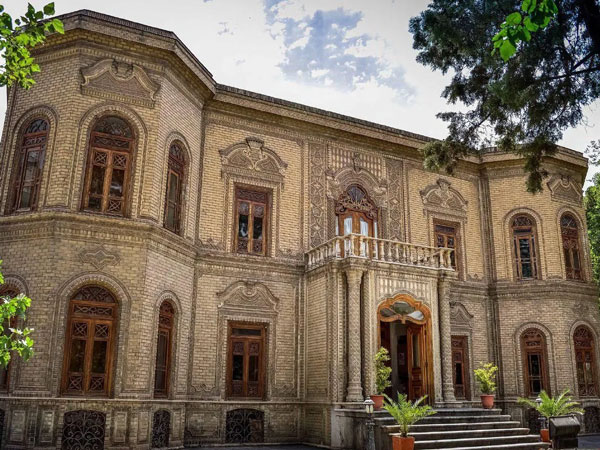
There are many valuable and spectacular museums in Tehran. One of these important museums is the Glass and Pottery Museum, which is among the top 10 museums in Iran. You can see many valuable pottery and glass works there.
Year of construction: 1307 AH
Area: 7,000 square meters
Introduction:
- Tehran Glass and Pottery Museum, also known as the Glass Museum for short, is one of the top 10 museums in Iran.
- The octagonal building of this museum was built by the order of Ahmad Qavam, known as Qavam-ol-Saltaneh.
- He was one of the politicians and prime ministers of Iran who served as prime minister five times during the late Qajar period and the beginning of Reza Shah’s reign.
- This museum and its house were added to the list of national monuments of Iran and registered as cultural heritage on May 28, 1998.
History: - Ahmad Qavam lived in this palace until 1952.
- He also carried out his administrative and political work there.
- But his property was confiscated by the parliament of that time. After that, this building was sold to the Egyptians. As a result, it became the Egyptian embassy for 7 years.
- After that, Afghanistan made it its embassy for a short time.
- Then in 1354, Farah Pahlavi’s office proposed that this building be sold to the Commercial Bank.
- After that, with the help of Iranian, French and Austrian designers and architects, this building was turned into a museum.
- Then in 1358, it was opened to the public.
Architecture: - This house is a combination of Iranian-European architectural styles.
- Its staircase design is in the Russian style. However, the art of Iranian architecture can be seen in the plasterwork of the ceilings, columns and inlays of doors and stairs, and its mirror work.
- The museum’s plasterwork dates back to two periods:
- The Qavam and Western style era during the Egyptian embassy
- The mirrorwork on the second floor dates back to the Qajar period
- After the revolution in 1368 AH, sections were added to the mirrorwork on the second floor in which religious and revolutionary themes are observed.
Current status: - Today, this building is an attractive and beautiful museum of architectural art, and its brickwork is an excellent example of the brickwork of historical houses.
- This museum houses valuable works dating back to the second millennium BC.
- There are also works discovered from the Chogha Zanbil temple, as well as works of pottery and glass that are rare in Iran.
- This museum is visited by 2 million tourists every year.
Halls:
- Sadaf Hall: Contains various types of pottery from the third and fourth centuries of the city of Nishapur.
- Golden Hall: Contains vessels decorated with Naskh and Nastaliq calligraphy all around and dating back to the Seljuk period. Mongolian figures can also be seen on these vessels, and their designs vary depending on the city of origin.
- Lapis Lazuli Hall: The works in this hall include a table from the Qajar era with seven-color glaze and decorated with the faces of characters from the Shahnameh. The name of each person is written above the face. The decorations of this section also include rosewater and carvings.
- Other sections include the administration and library sections. The library is a collection of about 4,000 Persian and English books in the fields of history, archeology, and art.
Details:
Address: Tehran, Jomhuri Street, Si Tir Street, Glass and Pottery Museum
Tel: 021-66708153 and 021-66708154
Entrance fee: - For Iranian visitors 2500 Tomans
- For non-Iranian visitors 15000 Tomans
Visit hours: Visiting days every day except mourning days – Monday - In the first half of the year: from 9 am to 7 pm
- In the second half of the year: from 8 am to 5 pm
How familiar are you with the tourist attractions of Tehran? Share with us.