


Imamzadeh Haroon, Isfahan Province

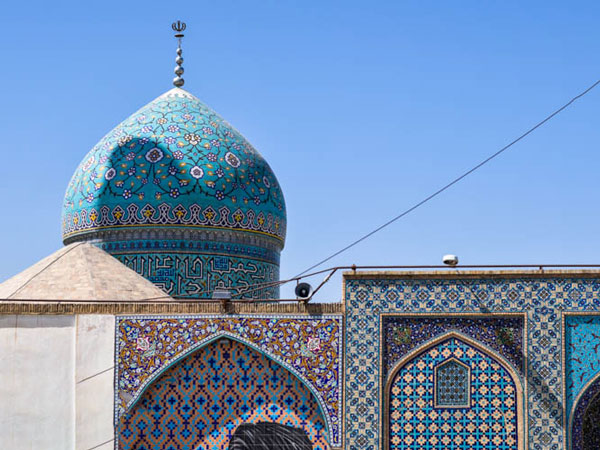
The tomb of Imamzadeh Harun Velayat is one of the pilgrimage monuments in Isfahan, which has been preserved since the Safavid era.
Introduction:
Location: Abdol Razzaq Street – Harunieh Alley
Date: 918 AH during the reign of Shah Ismail Safavi
Architecture and Decorations:
The tomb of Imamzadeh Harun Velayat in Isfahan consists of a tomb, a shrine, surrounding porches, and a tiled dome.
It also has two courtyards, one to the north of the tomb and the other to the west of the building.
From the west of the tomb, a door connects the tomb to a small school.
This school has various rooms.
The niches of the rooms and the surrounding walls, with a combination of bricks and tiles, which are called suspended decorations, create a unique attraction for the viewer.
This school is also connected to the northern part of the tomb by another connecting door.
Its beautiful entrance is written with various inscriptions in Khosh Thuluth script on white mosaic tiles on a blue background.
On the upper spier of the inscription, prayers for the twelve Imams are also engraved, written in Thuluth script.
Imamzadeh Haroon Velayat Isfahan
Decorations:
This holy building is adorned with extensive and magnificent decorations everywhere.
On the eastern side of this building, there is a porch with stone columns and porches around it, the communication path to which is formed with the tomb by a lattice window.
Inside the ceiling of the entrance, the decorations used are in the form of mosaic muqarnas decorated with tiles.
Today, various parts of the ceiling have been restored.
The lattice windows of the porch also have decorative borders.
These windows are made with nets in the color of Thuluth-Henna, with mosaic tiles and azure background, and are engraved with the names of the fourteen infallible saints.
On the side of the porch, there are altars decorated with mosaic tiles.
Inside the altar, there are three beautiful tablets whose inscriptions are engraved with stucco.
On the exterior of the building, in white masonry on azure tile background, the blessed names “Allah”, “Muhammad”, “Ali” are engraved in a square shape between the edges of the wall.
Various poems are also written on the wooden door.
The original identity of Harun (the name of the tomb) is not clearly known in history.
Some books consider this Imamzadeh to be one of the descendants of Imam Hassan Mujtaba (AS), but at the same time, followers of different religious schools, including Christians and Jews, each attribute this tomb to themselves in a way that is indicative of the religious importance of this holy place.
You can get to know other tourist attractions in Isfahan on Asan-e-Gard.