


Khorramabad Gap Bath

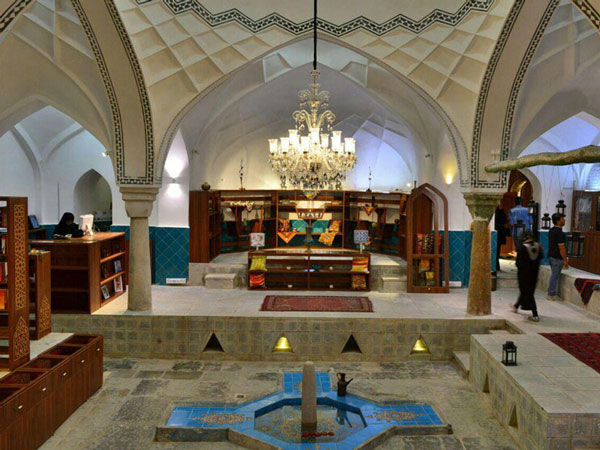
Khorramabad Gap Bath, also known as Asia Bath, dates back to the Safavid era.
Introduction:
Khorramabad Gap Bath was built by Ali Mardan Khan, the governor of Lorestan during the Safavid era.
It was also renovated and renovated by Hossein Khan Saki during the Qajar era.
The word “Gap” in the Lori language means large, and here it refers to the size of the bath space.
This complex has an area of about 710 square meters.
Gap Bath includes a cold bath and a hot bath, with a small space between these two intended for the installation of a toilet.
Public baths have been very prosperous in the past, but gradually the traffic to these places has decreased.
Gap Bath was also transferred to the private sector in 2016 and after a six-month closure, it was changed to a restaurant and teahouse complex.
This historical monument was registered in the list of national monuments of Iran in 1378.
Khorramabad Gap Bath
Different parts of the bath:
There are several steps at the entrance to the bath, which you can go down to enter the Sarbineh space.
Sarbineh:
This part consists of the public bath and dressing room.
This place was used for activities such as taking off clothes, shaving, resting, and eating.
A beautiful stone basin with a copper sunshade next to it is located on the floor of the Sarbineh.
There is also a large dome in this part with a height of 6.5 meters, which is located on four stone pillars.
There are platforms around the Sarbineh that are triangular niches and served as shoe racks, meaning people put their shoes in this part.
Middle door:
The middle door or corridor connects the Sarbineh part to the hot room of the bath.
In colloquial language, this part is also called “Pich Hamam”.
This part is designed to prevent cold air from penetrating and to prevent direct view into the hot room.
Another use is to prevent people from entering the hot room from the cold room without thinking, which can lead to colds, strokes, or cardiac arrest.
In the Gap bath, the doorway is designed as an octagon.
Hot room:
The most important part of the bath is the hot room, which is a place to remove dirt and grime.
Before entering this part, there is a stone basin for washing feet.
The architecture of this part is also like a sarbineh, and a dome is placed on four stone pillars.
A cupola is installed on the dome, which provided light to the interior of the bath.
This part is currently used as a restaurant.
Tone:
The heat needed to heat the bath was provided in this part.
This heat was provided by burning wood, wattle, thorns, and shavings.
Cow Wheel:
In this part, water was drawn out of the well by a large wheel.
This wheel was turned by a cow, and for this reason it is called “Cow Wheel”.
The sewage from the bath also entered the river through the cisterns located under Ferdowsi Street.
The roof of the bath:
Access to the roof of the bath is possible through the stairs located next to the well.
The roof is paved with bricks to prevent moisture from entering.
Small arches called “Kaneh” are also located on the main arches.
Other information:
Address: Khorramabad – Hafez Street – Gap Square – Next to Totunchi Mosque
Contact number: 066-33339999
Visit hours: Daily from 9 am to 7 pm
Amenities: Restaurant – Traditional cafe
Nearby tourist attractions: Khorramabad Traditional Bazaar – Imamzadeh Zaid Bin Ali
Have you ever visited Gap Bath in Khorramabad? Share your experience with us.
You can get to know other tourist attractions in Khorramabad on Asan Gard.