


Astan Quds Razavi Museum Complex in Mashhad

Historical Sites in Mashhad
Astan Quds Razavi Museum Complex in Mashhad
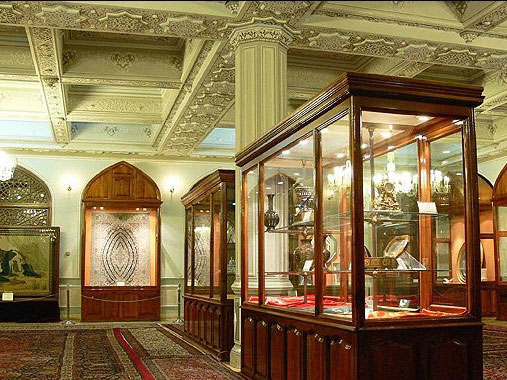
Astan Quds Razavi Museum Complex in Mashhad consists of various museums that display more than 8,000 objects. The purpose of creating this cultural center is to display the old works of the Holy Shrine and the holy places, as well as the precious works that have been presented to the heavenly court of Imam Reza (AS) by enthusiasts of the Ahl al-Bayt over time. The historical buildings of this museum reflect six centuries of architecture. The decorations of the Islamic period and its historical objects reflect a variety of handicrafts and arts made over the past ten centuries.
History:
Historical works donated or made specifically for the Holy Shrine have been kept in the treasury over the past centuries.
In 1316, at the current location of Sheikh Baha’i’s grave, the foundation stone of the Astan Quds Museum was laid.
Since 1318, exquisite works including gold inscriptions, wooden doors, containers, textiles, Khwarazmshahi stoneware, etc. have been selected for display.
But the first museum building was opened on December 22, 1945, on a land area of 1034 square meters.
This building was designed by French architect Andre Godard and built by engineer Kontratif and engineer Buick Ghahramani in three floors.
The museum objects were transferred to the ceremonial hall of Astan Quds Razavi in 1972.
Then, the construction of a new building for the museum on the southern side of the Holy Shrine was put on the agenda.
In 1977, the new building, consisting of two halls on one floor and with an area of 1300 square meters, was put into operation.
Different sections of the museum:
The museum complex of Astan Quds Razavi includes the following sections:
- Central Museum
This section itself consists of 11 different treasures:
Treasure of the History of the Razavi Shrine:
In 1999, this treasure was established on the ground floor of the Central Museum building in order to familiarize with the stages of growth and development of the city of Mashhad and the events that have occurred at the Razavi Shrine over the centuries.
The historical and valuable objects of this museum are divided into two sections.
The section of practical objects includes lighting fixtures, washing utensils for the shrine, steel pilgrimage letters, old locks and keys, gold tablets, etc.
The section of architectural objects includes the stone of Imam Reza’s (AS) shrine, gold, silver and steel shrines, gold inscriptions, gold and silver doors, wooden doors, steel windows, golden tiles, golden altars, etc.
The Museums of Astan Quds Razavi, Mashhad
Treasure of Visual Arts:
This section was opened in 1999 on the first floor of the Central Museum building to display a number of paintings by prominent Iranian and European artists in different styles.
Among the most important of them are the works of Kamal al-Molk, Ashraf al-Bilad (a famous painter of the Qajar period), Meraj (a painter of the Zand period), William James, etc.
Museums of Astan Quds Razavi in Mashhad
Stamp and Postal History Treasury:
This treasury was opened in 1980 on the ground floor of the Central Museum building.
This section contains hundreds of thousands of stamps and postal items from Iran and more than 240 countries.
However, only a portion of them are on display to the public.
Museums of Astan Quds Razavi in Mashhad
Banknote Treasury:
This section was also opened at the same time as the Stamp Treasury, which opened in 1980.
This treasury displays 500 banknotes from Iran and 80 other countries.
Museums of Astan Quds Razavi in Mashhad
Coin Treasury:
In 2009, it was felt necessary to display the coin treasury in a larger and independent space.
It contains approximately 1,900 exquisite coins from Iran and 50 countries around the world.
The coins displayed in this section belong to pre-Islamic periods such as the Achaemenids, Seleucids, Sassanids and Parthians and post-Islamic periods such as the Samanids, Khwarazmshahs, Seljuks, Ghaznavids, Abbasids, Mongol Ilkhanates, Timurids, Afshari, Safavids, Zandids, Qajars, Pahlavis and the Islamic Republic.
Astan Quds Razavi Museum Complex in Mashhad
Treasure of Utensils:
This section was opened in 1378 on the second floor of the Central Museum.
Selected objects such as clay pots, charcoal samovars, vessels discovered by chance during excavations of the Razavi Holy Shrine and other donated and endowment vessels are displayed in it.
Astan Quds Razavi Museum Complex in Mashhad
Treasure of Clocks:
This section was also opened at the same time as the Treasure of Utensils in 1378 on the second floor of the Central Museum.
This treasure displays various types of sundials, weighted, wall and table clocks.
Sundials include equatorial sundials and compasses, sundials and calendars, horizontal and vertical sundials, triangular index sundials, portable qibla of Abdol-Aameh, etc.
Museums of Astan Quds Razavi, Mashhad
Weaponry Treasure:
With the opening of this treasure on the second floor of the Central Museum building in 1378, various types of weapons and war and defense equipment after Islam in Iran were displayed.
The oldest of these weapons is the oil-lacquered bow from the Safavid period.
Other artifacts include mesh steel armor, ink-coated steel swords, rhinoceros skin shields, gold-plated steel helmets, knives, carved wooden spears (lacquered), carved and gilded axes, rifles and pistols with gold-plated barrels and ivory, metal and leather powder canisters from the Safavid to Qajar periods, a talismanic cloth shirt or Ayat al-Kursi shirt from the Zand period, and a steel sword with a gold-plated inscription and the name of Fath Ali Shah Qajar have been put on display to the public.
Museums of Astan Quds Razavi in Mashhad
Treasure of Astronomy:
With the advent of Islam and the need to determine religious times, the direction of the Qiblah and navigation for Muslims, astronomy expanded and scientists used tools to determine these necessities.
In 1378, these objects obtained from astronomy were displayed on the second floor of the Central Museum.
The oldest of them are from the Safavid period.
Most of the works on display in the watch collection were donated by Asid Jalaluddin Tehrani, which includes a variety of reflecting and refracting telescopes.