


Khorasan Grand Museum

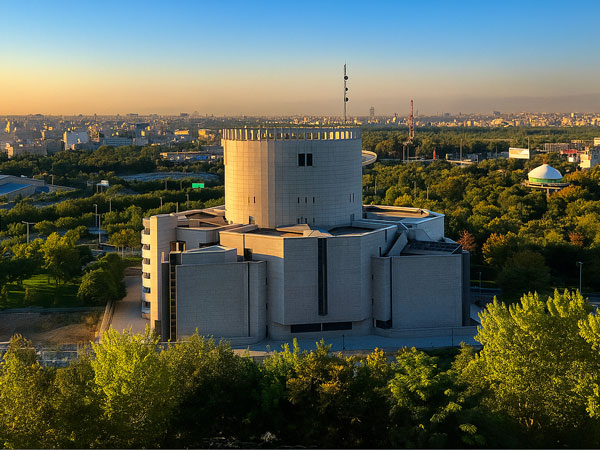
The Great Museum of Khorasan is the largest museum in Iran and one of the 13 regional museums in the country. This museum is in line with the latest world standards in terms of protective and security equipment and storage showcases. This museum displays valuable historical artifacts discovered in the East, which includes various sections including a storage tank, laboratory, specialized library, and meeting, exhibition and museum halls.
Great Museum of Khorasan Razavi
History:
In 1992, a group of intellectuals and intellectuals from Khorasan proposed a plan to create a museum commensurate with the dignity and splendor of Khorasan.
After the studies, the plan of Dr. Mohammad Amin Mirfundarsky, inspired by the building of the Palace of the Sun of Kalat Nader, was selected by the jury from among the others.
Then, 4900 square meters of land from the Kooh Sangi Park was provided by the municipality to the General Department of Cultural Heritage, Handicrafts and Tourism of Khorasan Razavi.
Then, in 2003, the Great Museum of Khorasan was laid and its construction began in 2005.
This building was built to the highest standard and with modern technologies on 12 floors and was inaugurated in 2014.
Currently, this museum is a place to display objects obtained from archaeological excavations in the three provinces of Razavi, North and South Khorasan.
These works reflect the greatness and splendor of Khorasan in past periods.
These objects belong to prehistoric, historical and Islamic periods.
The oldest of them belong to the Paleolithic era (about 800 thousand years ago).
The newest of these objects belong to the contemporary era.
These objects include stone tools, plaster pieces, manuscripts and leather, and pottery, glass and metal objects.
Different sections of the museum:
The Great Museum of Khorasan consists of six main sections.
Some of its important sections have been named in honor of the people who played a significant role in the design and construction of the museum:
Section One – Repository for Historical Objects and Architectural Decorations:
It is equipped with the most advanced security features against earthquakes, fire, and war damage.
There are more than 50,000 valuable and original historical objects in this repository.
So that if a number of them are exposed to the public every month, it will take 20 years for these works to be displayed again for the second time.
The repository also contains prehistoric objects including pottery, figurines, and stone tools.
Section Two – Laboratory for the Conservation and Restoration of Historical Objects and Decorations:
It is named after Dr. Baqir Ayatollah Zadeh Shirazi.
It includes laboratory facilities and equipment, conservation and restoration workshops, and also has a research, study, and documentation section for historical objects and architectural decorations.
Section Three – Conference Hall:
It is named after Dr. Mohammad Amin Mirfundarski.
It is equipped with audio-visual systems with an area of 2,700 square meters and a capacity of about 140 people.
The space next to the conference hall is dedicated to the makeup room, dressing room and reception hall.
Section Four – Engineer Sirajuddin Kazerooni Ravanshad Specialized Library:
With a capacity of more than 6,000 volumes of specialized books, specialized reports, Latin books, children’s books, theses and specialized magazines, it is built for the study of researchers.
In the documentation center of this library, there are more than 100,000 pieces of photos and films in the field of cultural heritage, handicrafts and tourism, which is considered a unique archive.
This archive includes negatives, original images, digital images, reports and maps.
Section Five – Museum Exhibition Hall:
It is built to hold seasonal and periodic exhibitions of historical and contemporary art works.
This section has an area of over 2,700 square meters.
Section Six – Museum Core:
It is gathered on the ground, first and second floors and has an area of over 4,000 square meters.
This section includes historical objects discovered in the Khorasan region.
Museum Information:
Address: Mashhad, Koohsangi Park
Tel: 051-37269502
Opening Hours: Daily from 8:00 AM to 5:00 PM except on official holidays
In addition to viewing historical and ancient works, visiting the Great Museum of Khorasan allows you to enjoy the space of Koohsangi Park, where the museum building is actually located.
If you have already visited this place, please share your experience with other Easy Tour users.