


Mashhad Museum of Heroic Rites

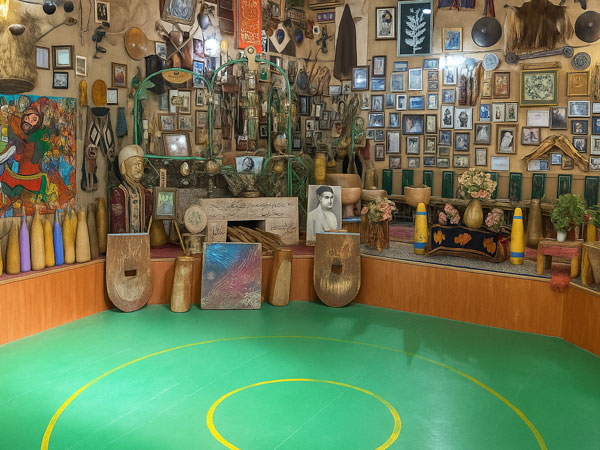
The Museum of Pahlavani Rituals of Mashhad, also known as the Shah Lafti Museum, consists of three sections: the Zurkhaneh, the Ayyarkhaneh, and the exhibition, and is considered the first museum of Pahlavani rituals and arts in Iran.
A visit to this museum is recommended by the Asan Tarteggar website for those interested in Ferdowsi and Shahnameh, as well as traditional Iranian rituals and Pahlavani rituals, which we will discuss further in the following article.
Shah Lafti Museum / Pahlavani Rituals of Mashhad
History:
This museum was founded by the master Ali Akbar Ghasemi, known as Pahlavan Rostam, on a land area of 2000 square meters in 1384.
Two years later, in 1386, its construction was completed and prepared for public viewing.
In 1389, the museum was registered as a UNESCO World Heritage Site by the Cultural Heritage Organization.
All stages of its construction, including design, architecture, carpentry, blacksmithing, and decoration, were carried out by Pahlavan Rostam.
The collection of objects in the museum is also the result of 45 years of Pahlevan Rostam’s travels to different cities on his motorbike.
Some of these objects are up to 100 years old.
Among the objects collected from all these young men, we can mention the most prominent of these personalities, namely Dr. Sheikh, a young man who has been treating the needy in Mashhad for free for years, and his medical bag, leather coat and motorbike are on display in this collection.
Different sections of the museum:
Now we will examine the different sections of the museum:
Zurokhaneh:
To enter this section through a very small door, you have to bend down.
It is beautifully written on it: Bow down when entering, because it is the place of politeness and tradition of young men.
Then, in the Zurkhaneh, Pahlevan Rostam is busy reciting poems from the Shahnameh to a mentor.
The young men engage in ancient and Zurkhaneh sports.
Around the walls of the Zurkhaneh are equipment such as a kabadhe, a mill, and a swimming board belonging to famous warriors, decorated with their photos.
Ayarkhaneh:
A place where the Ayarkhaneh and warriors, in addition to resting, also purify their souls and cultivate their spirits.
Sometimes, ritual and cultural ceremonies such as Golrizan are also held there.
Important meetings and vital decisions are also made in this place.
It consists of eight stands, four of which are for warriors who live in the neighborhoods of Darvazeh Khaboshan, Tayran, Razan, and Marv.
Two stands are for the Alawi and Razavi Sadats, and the last two sides are the stands for the leaders and people of faith.
Exhibition:
There is a place to familiarize visitors with the living conditions in old caravanserais.
In addition to reciting the Shahnameh and reading the Pardeh, this place is a place to display old equipment.
These equipment include carriages, threshing machines, and other traditional and agricultural tools.
Museum Information:
Address: Mashhad, Chahar Borj Village, Aramgah Road, Shanahnameh Boulevard, Chahar Borj Neighborhood, Bahar 24
Contact Number: 36781072-051
Opening Hours: To visit the Pahlavi Rituals Museum, you must make a prior appointment.
Mashhad Pahlavi Rituals Museum is a good place for interested tourists to listen to the Shahnameh with the beautiful voice of the hero Rostam and visit heroic objects. You can also visit this place on the Ferdowsi Mausoleum Tour.
If you have already visited this place, please share your experience with other Asan Tour users.