


Black Desert of Yazd Mountain

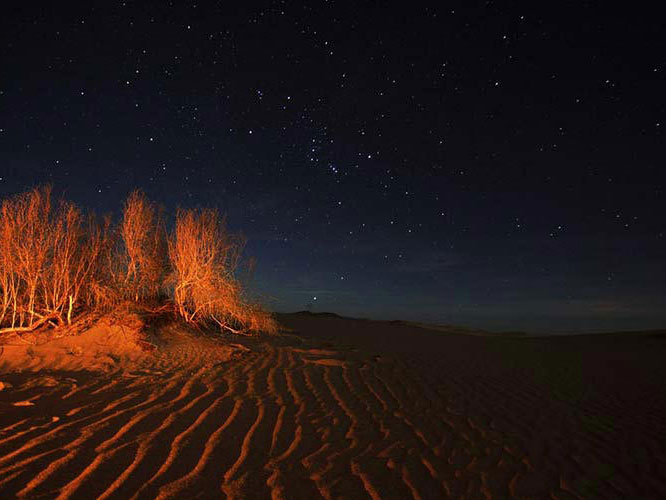
The Siah Kooh Desert of Yazd is one of the largest deserts in the province, attracting many tourists every year.
Introduction:
The center of Iran has many pristine and beautiful deserts, and many tourists choose these beautiful deserts as their tourist destinations.
One of these deserts is the Siah Kooh Desert or the Aqda Desert, also known as the Ardakan Desert.
The Siah Kooh Desert is one of the largest deserts in Yazd Province, located in the north of Ardakan County.
This desert is located in an irregular depression and adjacent to the Ardestan and Zardin deserts.
The shape of this desert resembles a crescent moon, with the Siah Kooh Mountain located in its inner arc, with an altitude of 2,000 meters.
The surface of this desert is uneven in most parts and has a windy state, which is due to the high salinity and high water level in this desert.
The land around the Siah Kooh Desert is also often swampy.
The Aqda Desert leads to the Salt Mountain and Grigon Mountains from the south, to the Nain and Nogonbad deserts from the west, and to the Anarak heights from the north.
The Black Mountain Desert of Yazd
Specifications:
Now we will examine the characteristics of the Black Mountain Desert of Yazd:
Climate:
The temperature fluctuation in this area is very high in winter and summer, and even during the day and night.
The minimum temperature is reported to be twenty degrees Celsius below zero and the maximum is forty-six degrees Celsius above zero.
The warmest weather is in July and the coldest weather is in January and February.
The best time to travel to the Black Mountain Desert is from late November to late winter.
Most of the time, especially at night, relatively strong winds blow in this desert.
Vegetation:
This area is very poor in terms of vegetation.
Plants such as halophytes, salt-loving plants, ostrich ferns, and gaz are rarely seen on the edges of the desert.
But outside the desert area and in lands that are less saline, there are plants such as sedge, arum, wild spinach, cacti, cornflower, mountain anemone, sedge, chamomile, and desert nightshade.
Wildlife:
Like many other desert areas, this area is home to a variety of reptiles such as snakes, salamanders, agama, lizards, and turtles.
Due to poor vegetation, soil salinity, and the lack of freshwater springs, less wildlife is seen in this area.
However, on the edge of the desert, animals such as wolves, jackals, foxes, hyenas, and birds such as partridges, titmouses, quails, eagles, wagtails, and sparrows can be seen.
Facilities and recreation:
Due to the geographical location of this desert, there is no accommodation in this area.
If you plan to spend the night in this area, you will have to pitch a tent.
But you need to make the necessary arrangements for this and inform others about your accommodation.
The best way is to spend the night in Ardakan city.
Also, due to the presence of swampy lands in this area, this place is not a good place for off-roaders.
This desert is recommended for those who want to see pristine nature without the hustle and bustle.
Access routes:
The distance between Aqda Desert or Ardakan Desert from Tehran is about 6 hours.
There are three different routes to access the Siah Kooh Desert:
The first route is the Ardakan route to Ahmadabad and then the Ahmadabad dirt road that passes by the railway line and reaches the Siah Kooh Desert.
The second route is the Anarak route to Nain and then the dirt road next to the railway line to Nogonbad station.
The third route is the Anarak dirt road to Ismailian and then Siah Kooh.
You can get acquainted with other tourist attractions in Yazd on an easy tour.