


Mashhad Bread Museum

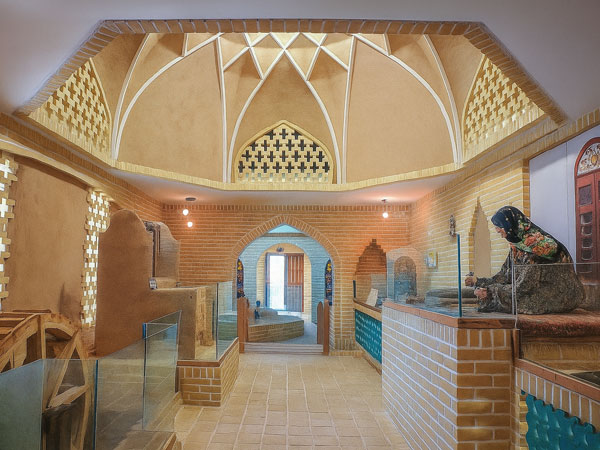
The Mashhad Wheat Plain Bread Museum was established with the aim of promoting the culture of using traditional bread and was created by the private sector. This museum is one of the 13 specialized bread museums in the world and the first museum of its kind in the Middle East. This museum includes various items such as flour preparation, bread making tools, types of bread and a bread photo gallery. The museum is divided into pavilions of soil, water and wind, fire and opera dance (a kind of Khorasani ritual).
History:
The Bread Museum was established in November 2011 by the Mashhad Wheat Plain Bread Industrial Company.
The construction of the museum was carried out based on traditional Iranian architecture and using materials such as brick, straw, clay, plaster and wood.
Bread has been one of the manifestations of our culture and identity in the field of nutrition over the centuries.
Mashhad Bread Museum
Different sections:
The different sections of the museum include:
Soil pavilion:
The stages of agriculture in the past are displayed by elements and mannequins.
In the sowing stage, the uneven ground is prepared for sowing wheat seeds.
Then, the wheat harvest is when the wheat turns yellow and is harvested by humans with a sickle.
In the threshing stage, the wheat is collected in a part of the ground and then crushed with the help of a tool called a threshing machine.
In the final stage, the threshing is done by throwing the crushed threshing into the sky with a winnowing machine so that the straw from the wheat can be separated by the wind.
Water and Wind Pavilion:
This pavilion includes several tools for making bread in the past.
The hand mill is made up of two hard and heavy stones placed on top of each other, which are slid together by the force of the human arm.
This device is considered one of the most primitive wheat grinding devices.
A water mill that gets its power from the flow of water.
A windmill that is used in windy areas and its driving force is the wind.
Fire Pavilion:
This pavilion displays various types of ovens and breads.
A stone oven in which Sangak bread is baked.
A teak oven made of cast iron alloy, and its most important feature is its portability.
A clay oven has different types, such as a clay oven (clay oven), a standing oven (yard oven), and a nomadic oven (in-ground oven).
Oper Dance:
This dance is one of the Khorasani rituals and dates back to the Parthian period in the southern Khorasan region.
The Oper dance, also known as Afar or Afar, is in line with the beliefs of the people of the region, such as how creation, planting, having, and harvesting were formed.
This dance includes movements such as sowing seeds, guarding the field, praying for rain, reaping and threshing, baking bread, and finally giving thanks and rejoicing in the harvest.
Mashhad Bread Museum
Information:
Address: Mashhad, 17th km of the Asian Highway, after the Ferdowsi intersection, Shahid Yazdi Alley (first alley on the right), Mashhad Plain Wheat Factory
Contact number: 09336900386
Opening hours: Saturday to Wednesday 8am to 2pm
If you have visited this place before, please share your experience with other Asan-e-Tarrif users.